California DTF workflow is transforming how California shops move from concept to completed garments, delivering speed without sacrificing quality. By embracing efficient steps from design handoff to final delivery, businesses can streamline operations and meet rising demand. This approach leverages California DTF printing and direct-to-film printing to maintain vibrant colors on a variety of fabrics. From initial design to finished product, the DTF design to delivery path helps reduce bottlenecks and boost on-time shipments. With thoughtful planning and DTF workflow optimization, your shop can scale from small runs to wholesale fulfillment across DTF production California networks.
Beyond the core steps, this approach can also be described using alternative terms that reflect the same concept through related topics. Picture a film-to-fabric transfer pipeline where artwork is prepared digitally and applied via heat pressing for durable textile decoration. This perspective aligns with on-demand textile printing, scalable production flows, and California-based print houses delivering rapid turnarounds. By framing the process as a complete textile decoration pipeline—from design sketches to finished garments—brands can communicate reliability and consistency to partners and customers.
California DTF workflow: From design to delivery
California DTF workflow represents a blueprint for turning concepts into finished garments quickly while preserving print integrity. By coordinating design, prepress, printing, curing, and delivery within a unified workflow, California shops can shorten lead times without sacrificing color fidelity. Embracing the California DTF workflow also helps maintain consistency across product lines and orders of varying sizes.
DTF design to delivery emphasizes clear communication of garment type, fabric color, and ink limits from the outset. Implementing standardized color profiles, embedded fonts, and high-resolution files minimizes back-and-forth and ensures reliable results across batches and partners.
California DTF printing: Materials, color management, and prepress
California DTF printing hinges on choosing reliable materials and clean prepress practices. Select a proven DTF film, compatible adhesive powder, and transfer adhesive suited to cotton, blends, or polyester. Local California suppliers can affect lead times, so diversify sources to keep production moving.
Color management and prepress standards are the bedrock of consistency. Calibrate monitors, soft proof for fabric performance, and embed ICC profiles to keep colors stable from design to print. These steps underpin effective DTF workflow optimization in California shops.
Direct-to-film printing efficiency: Streamlining production and turnaround
Direct-to-film printing efficiency comes from batching, controlled heat, and disciplined maintenance. Standardize nozzle checks, ink balance, and heat-up cycles to stabilize output during high-demand periods. A repeatable routine reduces surprises when production volumes spike.
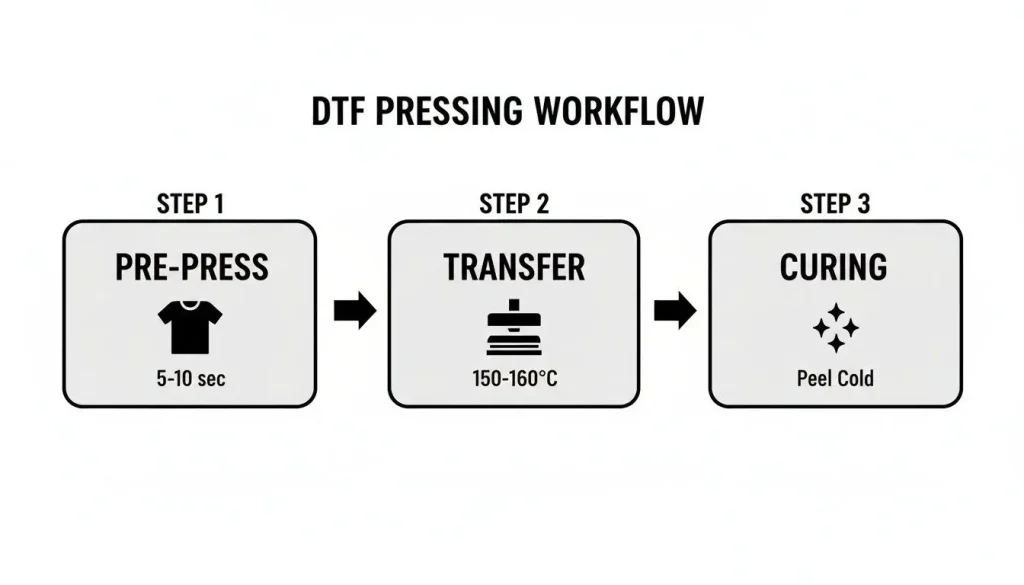
Film transfer requires precise parameters: platen temperature, press duration, and even pressure. Align designs carefully and ensure white underprints are complete for dark fabrics to prevent color mismatch and ghosting, especially on multi-color designs.
DTF production California: Scaling for high-volume orders
DTF production California focuses on scaling for wholesale and high-volume orders. Invest in capable printers, automation for curing and finishing, and centralized workflow software to track each job from design approval to shipping. A scalable setup minimizes handoffs and accelerates delivery.
Develop batch planning and inventory controls that group similar garments and prints to streamline changeovers. A robust fabric catalog with recommended settings helps operators apply the right parameters quickly, reducing misprints and waste.
DTF workflow optimization: Best practices to reduce bottlenecks across California
DTF workflow optimization: Best practices to reduce bottlenecks across the state. Start with clear SOPs, ongoing operator training, and visible dashboards that flag delays before they impact shipments. A focus on process visibility accelerates improvements and consistency.
Strengthen partnerships with local suppliers, adopt sustainable waste practices, and document everything from file prep to final packaging. Regular reviews of QC data and customer feedback close the loop, turning insights into faster, more reliable California DTF printing outcomes.
Frequently Asked Questions
What is the California DTF workflow and how does it improve speed and quality in DTF printing?
The California DTF workflow is an end-to-end approach to direct-to-film printing that moves a design from DTF design to delivery within California. It standardizes design handoff, prepress checks, printing, transfer, curing, finishing, and delivery to reduce bottlenecks and improve color fidelity and durability. By aligning processes and QC early, it enables faster turnarounds for CA customers and scalable production while maintaining consistent quality.
How does the California DTF workflow handle design to print readiness for dark fabrics?
In the California DTF workflow, design-to-delivery for dark fabrics starts with print-ready files: high resolution, 300 DPI at final print size, embedded fonts, and color profiles (ISO Coated v2). Calibrate monitors and use soft proofing to predict color on fabric, and plan for white ink underprints and color separations that stay vibrant after transfer. This supports efficient DTF printing and a smooth DTF design to delivery process.
What prepress and material prep steps are essential in the California DTF workflow to avoid bottlenecks?
Key steps include selecting reliable DTF film and adhesive powder, performing proper powdering and curing, and implementing a simple pre-check protocol. In California, diversify suppliers to avoid stockouts and establish relationships with multiple vendors. Include quality checks for missing colors or misregistrations to drive smooth DTF production California.
What best practices exist for printing, transfer, curing, and finishing in the California DTF workflow to ensure durability?
Best practices include: printing with white ink capability on dark fabrics, regular nozzle checks and color calibration; transfer with appropriate platen temperature (roughly 165–180°C), duration (10–25 seconds), and even pressure; curing and finishing with a short cure window and post-press cooldown; and a final QC pass for alignment and color. These steps support DTF workflow optimization and durable results.
How can I optimize delivery and fulfillment within the California DTF workflow for fast turnaround?
Optimize packaging and labeling to protect prints and include care instructions; implement a robust order management system and batch planning to reduce changeovers; use regional fulfillment centers or local printers to shorten California delivery times; provide transparent ETA updates and traceable shipments. For scalability, align with DTF production California capabilities to maintain fast, reliable delivery.
| Phase | Key Points | Notes/Examples |
|---|---|---|
| Design Phase | – File prep: high-res, vector logos, 300 DPI at final print size; – Color management: calibrate monitors, soft proofing; – Design-to-delivery alignment: plan for white ink underprints on dark fabrics | California market emphasizes color fidelity alongside speed. |
| Prepress and material prep | – Materials selection: reliable DTF film, compatible adhesive powder, transfer adhesive; – Powdering and curing: dust film and cure briefly; – Quality checks: inspect for missing colors, misregistration, surface imperfections | Establish vendor relationships; local availability affects lead times. |
| Printing and transfer | – Printing: printer configured for white ink on dark fabrics; ink balance, nozzle checks, color calibration; – Heat-up cycles: stabilize print quality; – Film transfer: heat press parameters, alignment; – Layering on textiles: manage color separations and white underbase | Proper alignment and consistent pressure prevent skewing; plan for multi-color designs. |
| Curing and finishing | – Curing: brief window; – Finishing touches: inspect for scuff marks and trim remnants; – Quality control: final QC pass | QC protects durability and professional appearance; helps reduce returns. |
| Delivery and fulfillment | – Packaging and labeling; – Inventory and fulfillment; – Shipping optimization | Regional fulfillment can cut shipping times; track shipments and provide ETA. |
| Troubleshooting and optimization | – Color variability; – White ink performance; – Film-to-fabric alignment; – Garment variability | Maintain standard color profiles and calibration; print color test strips; use registration marks. |
| Best practices for fast & efficient workflow in California | – Local supplier networks; – Batch planning; – Automation; – Documentation/SOPs; – Compliance & sustainability | Proximity to hubs reduces lead times; implement SOPs and sustainable practices. |
Summary
California DTF workflow is a framework for building a scalable, reliable, and fast-to-market printing operation. By investing in thoughtful design, meticulous prepress preparation, consistent printing and transfer, robust curing and finishing, and smart delivery practices, you can consistently deliver high-quality direct-to-film prints that meet the demands of California’s diverse market. As you refine your process, keep the focus on alignment between design intent and the final product. Use a feedback loop that captures issues from QC and customer feedback to continually improve the workflow. When well-executed, the California DTF workflow becomes a competitive advantage—allowing brands to move from concept to delivery with speed, accuracy, and confidence.