DTF printing has emerged as a versatile and scalable method for garment decoration. Direct-to-film transfers offer vibrant color reproduction, a soft hand feel, and compatibility with a wide range of fabrics. This DTF printing guide is designed to help beginners grasp the core concepts of direct-to-film transfers while providing actionable tips for optimizing workflow. You’ll also find guidance on DTF printer setup and choosing the right DTF ink types for different fabrics. Whether you run a startup or an established shop, this article aims to help you achieve consistent, high-quality results.
From a different angle, this approach is described as direct-to-film transfers or film-based transfer technology for textiles, using a PET carrier to hold the design before heat application. In practice, pigment inks are printed onto the clear sheet, then an adhesive powder is applied and cured to create a durable bond during the final press. This method accommodates a wide range of fabrics, including cotton blends and synthetics, while preserving a soft hand feel and strong wash durability. For shops evaluating methods, comparing DTF vs DTG can help weigh substrate flexibility, cost per item, and pretreatment needs. Focusing on film quality, color management, and reliable workflow can help scale production while maintaining consistency across batches.
Frequently Asked Questions
What is DTF printing and how do direct-to-film transfers work? (DTF printing guide)
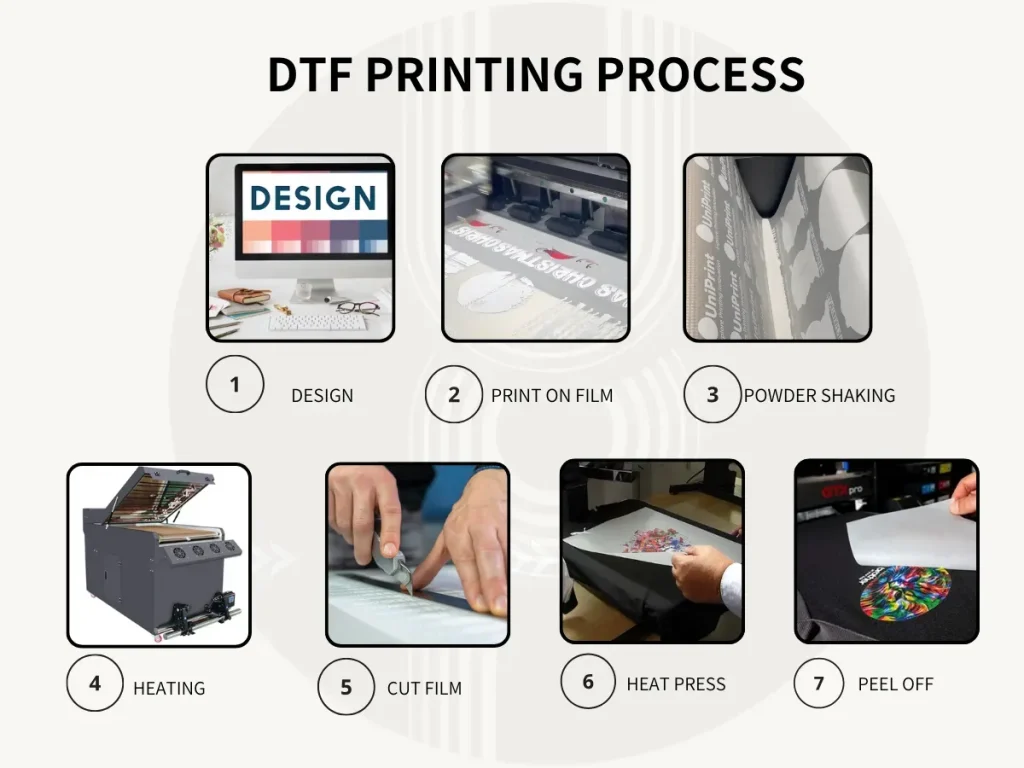
DTF printing is a process that prints pigment inks onto a transparent PET film and uses a heat-activated adhesive powder to transfer the image to fabric. The DTF printing guide covers steps such as applying a white underbase, printing CMYK colors, coating with adhesive powder, curing, and pressing to the garment. This method yields vibrant color, a soft hand feel, and broad fabric compatibility with many substrates, often without pretreatment.
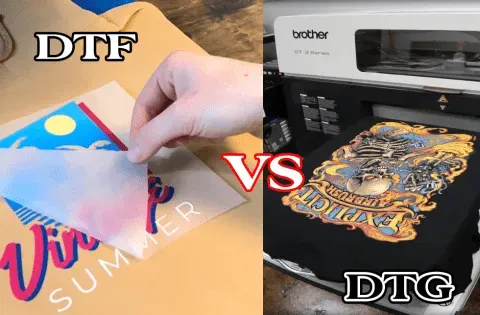
DTF vs DTG: when should you choose DTF printing over direct-to-garment printing?
DTF printing offers strong fabric versatility, lower per-unit costs for small runs, and minimal pretreatment, making it ideal for a wide range of fabrics. DTG excels on 100% cotton with very high-resolution color but may require pretreatment and higher ink use. Many shops use a hybrid approach—DTF for diverse fabrics and DTG for premium cotton pieces—depending on substrate variety, volume, and color management needs.
What is involved in DTF printer setup and color management?
DTF printer setup starts with calibration, nozzle checks, and print head alignment, followed by substrate calibration and color profile configuration in your RIP software. Run test swatches to verify white ink opacity and color accuracy across fabrics, and build a library of profiles for different garment types. Proper DTF printer setup and color management are key to consistent results.
What are the main DTF ink types and how do they affect the transfer?
DTF ink types are typically pigment-based, with white ink for opacity on dark fabrics and CMYK inks for full color. The choice of DTF ink types influences color vibrancy, opacity, and wash durability of the transfer. Using compatible inks with the PET film and curing process helps maximize adhesion and color fidelity.
Which fabrics work best with direct-to-film transfers and how should I prep them?
DTF transfers work well on cotton, blends, poly fabrics, and many synthetics. For best results, preheat the substrate as needed, align the film carefully, and apply the correct temperature, time, and pressure per the material supplier. The direct-to-film transfers technique often eliminates the need for pretreatment on many fabrics, expanding your substrate options.
What are common DTF printing troubleshooting tips to improve results?
Common issues include uneven white base coverage, powder not adhering, misregistration, and ghosting. Solutions start with clean film paths and dust-free films, consistent adhesive powder application, and correct curing and heat-press settings. Regular printer maintenance and testing on new fabrics help prevent color drift and defects in production runs.
| Topic | Key Points |
|---|---|
| What is DTF printing? | DTF printing prints pigment inks onto a transparent PET film, uses a heat-activated adhesive powder, cures, and then heat-presses to transfer to fabrics. Results in a durable print with vivid color and a soft hand feel; compatible with cotton, polyester blends, canvas, and some synthetics; often avoids separate pretreatment on many substrates. |
| How direct-to-film transfers work | Workflow: design in a RIP/design program; print white base plus CMYK onto PET film; apply adhesive powder; cure; preheat garment; position film face-down; press at recommended time/temperature; peel to reveal a vibrant image with soft hand and good wash durability when parameters are correct. |
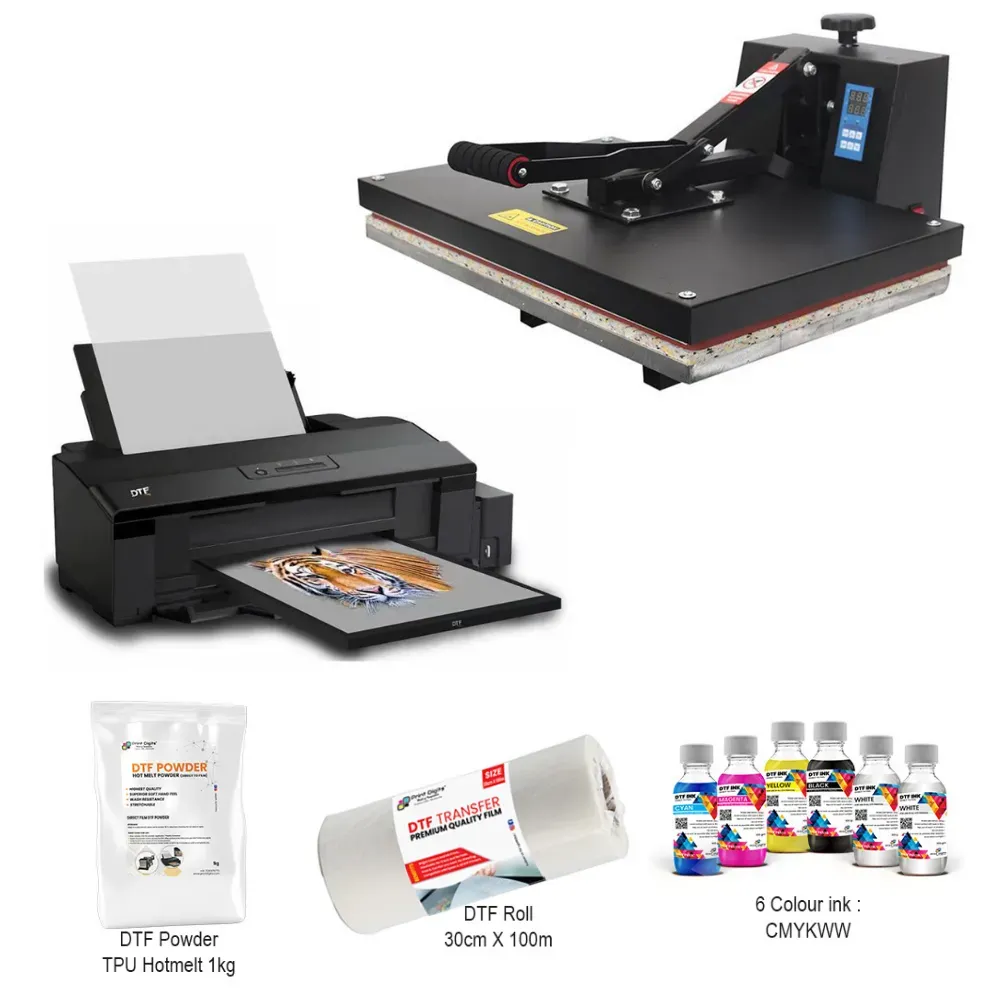
| Equipment & materials | DTF printer with white and CMYK inks; PET film for DTF; transfer powder and curing device; heat press with precise temperature control; curing oven or hot plate; RIP software; cleaning supplies; suitable substrates (cotton, blends, poly). |
| DTF inks & films | Pigment inks sit on the PET film surface; white ink creates opacity on dark fabrics; CMYK provides color; film must be transparent enough for design transfer; high-quality film reduces ghosting/tearing; ink/film kits from manufacturers are common. |
| Printer setup & color management | Calibrate printer; verify head alignment and nozzle checks; calibrate substrate; configure RIP color profiles to match garment; run test swatches for color accuracy and white coverage; ensure proper white opacity on dark fabrics; build a library of profiles. |
| Workflow: design to finished garment | 1) Design with separate white channel for opacity on dark fabrics. 2) Print white layer first (if required), then CMYK. 3) Apply adhesive powder. 4) Cure the powder. 5) Preheat substrate and align film. 6) Transfer with proper temp/time/pressure. 7) Peel (cold or hot). 8) Post-processing and light ironing if needed. 9) Inspect for color consistency and defects. |
| DTF vs DTG | DTF offers flexibility across fabrics and often lower per-unit costs for small runs; no need for pretreatment on most substrates. DTG excels on high-resolution color on 100% cotton but may require pretreatment and has fabric/type limitations. A hybrid approach (DTF for many fabrics, DTG for high-end cotton) is common. |
| Troubleshooting | Common issues: uneven white base, powder adherence problems, misregistration, white specks. Solve by cleaning screens/films, ensuring dust-free film, consistent powder, adjusting shaker, proper curing/pressing temps and times, maintaining printer components, and testing new fabrics before full runs. |
| Cost, ROI & best practices | Upfront costs for printer, film, and powder; factor in training and color management time. Track items printed per month, per-unit consumable costs, and price per transfer. Maintain standard color profiles, clean workspace, robust heat press, and a strong QA process for steady margins. |
| Maintenance & care | Regular maintenance: clean printer/film path, replace worn parts, inspect for fabric residues, store films/powders properly; reduces downtime and extends equipment life. |
| Applications | Fashion/apparel, sportswear, promotional items, and custom merchandise. Works on cotton blends and poly fabrics, enabling single-color logos or full-color artwork with durable, washable results. |
Summary
Conclusion: DTF printing represents a modern, adaptable solution for garment decoration, combining the strengths of direct-to-film transfers with a streamlined production workflow. With the right equipment, careful color management, and disciplined process control, you can achieve consistent results across a broad range of fabrics. Whether you are exploring DTF printer setup for a startup or expanding an existing operation with DTF ink types and compatible films, this guide provides a solid foundation for success. As you gain experience, you will refine your workflow to maximize efficiency, minimize waste, and deliver high-quality transfers that satisfy customers and grow your business.