DTF color separation tips are the backbone of achieving professional-quality prints in modern garment decoration, guiding designers from concept to production with a clear plan for how color behaves on fabric. When you embrace a deliberate separation workflow, you can capture accurate tones, preserve delicate details, and produce vibrant DTF prints that withstand the rigors of washing and daily wear. The right approach starts with planning your palette, organizing your layers, and selecting a white under-base strategy that keeps midtones intact while ensuring shadows don’t overpower highlights, even on textured fabrics. Optimizing your file setup—checking color spaces, maintaining gradient integrity, and validating proofs on representative fabrics—reduces trial-and-error cycles and improves predictability across production runs, saving time and material. By applying these practices consistently, you can improve color fidelity, optimize ink usage, and deliver durable results that clients trust, repeatably and at scale.
In other terms, color separation for DTF is about translating a full-color design into a set of print-ready channels that your machine can reproduce faithfully. Think of it as color channel mapping and tonal balancing, where you plan a layered sequence that preserves detail in highlights, guards midtones, and ensures opacity on dark fabrics through a well-designed under-base. From an LSI perspective, you’ll want to connect related concepts such as color management, device ICC profiles, gradient fidelity, and proofing with fabric-specific tests so search engines see the semantic relationships between topics. A practical approach is to start with a reduced palette, group adjacent tones, and test each channel on a similar textile to understand how ink density, film transparency, and curing interact. By treating color separation as a repeatable workflow—documenting channel order, optimizing clip paths, and keeping thorough proofs—you can build a predictable production routine that yields consistent, durable, and visually appealing results. This mindset aligns with the broader aim of durable, wash-ready prints that maintain color accuracy across different fabrics and lighting conditions. With practice, the separation becomes instinctive, enabling you to scale your operations while keeping quality consistent from the first run to the last, regardless of design complexity.
DTF Color Separation Tips for Consistent, Long-Lasting Results
DTF color separation tips form the backbone of a predictable production workflow, helping you achieve consistent results across runs and fabrics. Start by planning a restrained, well-curated palette that minimizes ink consumption while maximizing tonal accuracy. A strong under-base white layer on dark fabrics serves as a crucial foundation for vibrancy, reducing the risk of muddy colors and improving opacity. By applying these tips, you’ll build a repeatable system that yields vibrant DTF prints with fewer color surprises on production days.
To translate art faithfully, you should align your color strategy with print-ready files, embedded ICC profiles, and device-specific color management. Calibrated monitors, proofing against physical swatches, and thoughtful file preparation (including proper color space and gradient handling) ensure your separation channels reproduce gradients, textures, and photographic details with fidelity. Incorporating these DTF color separation tips into your SOPs cuts trial-and-error time and increases throughput without sacrificing color fidelity or longevity.
DTF Printing Color Separation: Workflow Essentials for Vibrant DTF Prints
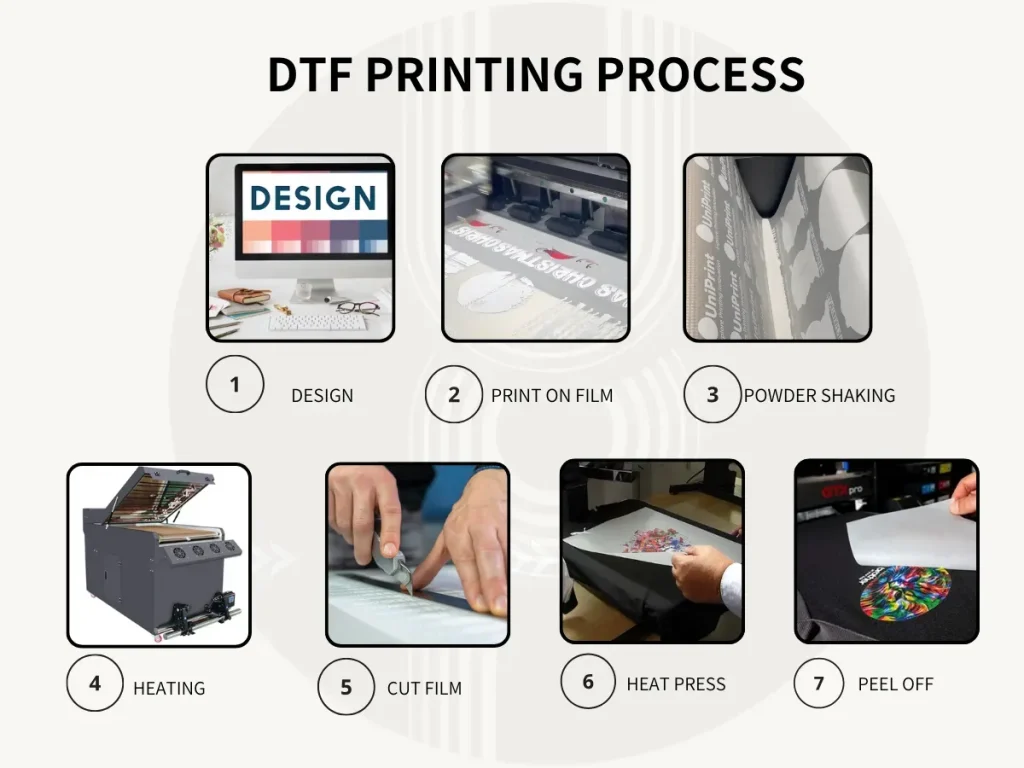
A solid DTF printing color separation workflow eliminates guesswork and sharpens print quality. Begin with a clear separation strategy: an under-base pass to maximize opacity on dark fabrics, followed by color passes that build the image, and a finishing pass to heighten detail. This multi-pass approach helps maintain color balance, reduces oversaturation, and supports more predictable outcomes when you scale production for multiple garments.
In practice, you’ll want to manage the flow across devices and films as part of your color separation methods for DTF. Check printer settings, ensure ICC profiles match the film you’re using, and verify ink usage per channel. When done correctly, you’ll see more vibrant DTF prints and better color stability across runs, delivering professional results that hold up to washing and wear.
Color Separation Methods for DTF: Techniques to Preserve Detail on Dark Fabrics
On dark fabrics, the method you choose for color separation has a direct impact on opacity, contrast, and detail retention. A strong under-base white layer remains essential, but how you clip, mask, and layer the color channels determines where tonal transitions stay clean and where textures emerge. Thoughtful separation methods for DTF can preserve fine lines and gradients without sacrificing durability.
Texture-rich designs and photographically detailed artwork benefit from precise channel management—careful clipping to keep white where it’s needed, and gradual ramping within color channels to avoid harsh edges. By treating under-base visibility as a design parameter rather than a fixed constant, you can achieve more consistent, long-lasting DTF prints that retain depth on dark textures.
Optimizing Artwork Preparation for DTF Color Separation
Effective artwork preparation sets the stage for successful DTF color separation. Start with high-resolution source art and a clean color palette, planning for robust gradient maps and mid-tone handling that translate well after separation. When exporting, maintain color accuracy by choosing an appropriate color space and avoiding unnecessary CMYK conversions that can muddy gradients. The goal is to preserve the artist’s intent while supplying your printer with well-defined channels.
For many DTF workflows, RGB artwork thoughtfully converted to a suitable profile yields better gradient reproduction than default conversions. This careful preparation helps ensure that the subsequent separation channels produce accurate color gamuts, reduce color shifting, and support consistent results across fabric types. Clear naming, organized layers, and proof-ready files speed up production and help you maintain color fidelity across batches.
Managing Color Channels and Under-Base for Maximum Vibrancy
Effective color channel management is where vibrancy is earned. Define a white under-base that aligns with key details in your design, then build your color passes on top with calibrated ink densities. Balancing opacity and transparency across channels prevents dulling and keeps gradients smooth. Keeping channels tightly organized helps you reproduce the artwork faithfully while controlling ink usage and curing requirements.
Consistency across devices and runs is supported by device-wide color management, including monitor calibration and embedded ICC profiles. When you standardize layer order, channel naming, and proof references, you’ll reduce color drift and achieve reliable, vibrant DTF prints that maintain color integrity through washes and wear. This disciplined approach is central to producing long-lasting results without compromising detail.
Testing, Proofing, and Curing for Long-Lasting DTF Prints
A rigorous testing and proofing routine is essential to deliver long-lasting DTF prints. Create a log that captures fabric type, ink density, curing time, and film compatibility for each project. Use reference proofs to compare against on-garment samples and adjust channel balance, under-base strength, and color ramps before proceeding to full production. This practice helps you predict performance and reduces post-production surprises on customer orders.
Curing is a critical final step for durability. Optimize heat and time to cure the white under-base and color layers, ensuring the print withstands washing and daily wear. By validating curing parameters and maintaining a consistent workflow, you’ll achieve durable, color-accurate results that align with expectations for long-lasting DTF prints and customer satisfaction.
Frequently Asked Questions
What are the core principles of DTF color separation tips for achieving accurate tones on garments?
DTF color separation tips start with planning a tight palette and starting from high-resolution source art. Separate into an under-base white, mid-tone color channels, and detail passes to preserve vibrancy on fabrics. Use RGB-to-ICC color management and test with fabric swatches to confirm gradients and textures translate faithfully. Consistency across batches comes from repeatable setups, documented workflows, and careful monitor calibration.
How do DTF printing color separation methods impact vibrancy and durability?
The choice of separation methods directly influences color gamut, ink usage, and wash-fastness. A well-defined white under-base and thoughtful layer order help preserve vibrancy and reduce color bleeding, especially on dark fabrics. Calibrated monitors and embedded ICC profiles ensure proofs match real prints, improving predictability for vibrant DTF prints. Proper curing and durable ink formulations also contribute to long-lasting DTF prints.
Which color separation methods for DTF are best for achieving vibrant DTF prints on different fabrics?
Adopt a multi-pass separation workflow: a dedicated under-base pass, color passes, and a finishing pass to boost detail. Limit your palette to essential tones to improve predictability across cotton, blends, and dark fabrics. Clip and mask tricky elements to keep the white under-base visible where needed and avoid muddy colors, supporting vibrant DTF prints.
What steps in a DTF color separation workflow contribute to long-lasting DTF prints?
Plan references, choose the right color space, and save your channels with consistent naming. Use a strong under-base, verify alignment across the printing chain, and cure properly to maximize wash durability. Maintain a separation log to track ink usage and results across fabrics for long-lasting DTF prints.
Why is under-base and layer management essential in DTF color separation tips for consistent results?
Under-base defines opacity and tonal balance; a weak white channel can yield dull or translucent results on dark fabrics. Managing layer order, clipping, and masking ensures color channels reproduce gradients and textures cleanly, improving repeatability and reducing surprises. These DTF color separation tips help you deliver consistent results across batches.
How can I optimize artwork preparation and testing to ensure vibrant DTF prints?
Start with high-resolution source art and plan how RGB will translate into the target color space. Build a repeatable separation recipe: reference colors, estimated ink usage per channel, and a clear white under-base strategy. Create proofs and run fabric tests, recording fabric type, ink density, and curing times to refine your settings. With careful artwork preparation and testing, you can deliver vibrant DTF prints with reliable color accuracy.
| Point | Description | Practical Tip |
|---|---|---|
| Core idea of color separation in DTF | Color separation translates a full-color image into printable channels to reproduce faithfully; often involves separating light colors, dark colors, and under-base white. | Define the required channels early and test on fabric swatches. |
| Under-base white layer on dark fabrics | The under-base layer acts as a primer that stabilizes color and improves opacity; without it, colors can look dull or translucent on dark fabrics. | Create a well-defined white channel that aligns with design details. |
| Multi-pass separation approach | A layered approach: an under-base pass, followed by color passes, then a finishing pass to enhance details; helps maintain color accuracy and manage saturation. | Plan passes and test their interactions on real fabrics. |
| Palette planning and color management | A limited, well-curated palette can simplify separation and improve color predictability; calibrate monitors and embed ICC profiles for cross-device consistency. | Limit palette; calibrate monitors; embed ICC profiles; check proofs against devices. |
| Artwork preparation | Use high-resolution source art, maintain color accuracy through the correct color space, and plan how gradients will translate after separation (RGB often yields better results than straight CMYK for some workflows). | Export with the correct color space; preserve intent; consider gradient maps for smooth transitions. |
| Channel management and masking | Manage clipping and masking to ensure the white under-base remains visible where needed and color channels reproduce tonal transitions cleanly. | Clip masks appropriately; maintain proper layer order and channel re-use. |
| Workflow standardization | Standardize file naming, maintain consistent layer order, and keep proofs accessible to compare results across projects; document decisions to train teams. | Document workflow; keep a log of tests and proofs. |
| Ink, film, and curing considerations | Ink formulation and film quality influence vibrancy and longevity; calibrate and test curing times to ensure durability across fabrics. | Test curing times; choose compatible film; align ink and film with separation channels. |
| Testing and production efficiency | Regular validation with real fabrics, maintaining proofs, and logging results helps reduce waste and improve throughput while preserving color fidelity. | Keep reference colors; log test results; run batch proofs to ensure consistency. |
Summary
The table above highlights the core concepts from the base content on DTF color separation, including what separation means, the importance of under-base on dark fabrics, a multi-pass workflow, palette and color management, artwork preparation, channel handling, workflow standardization, ink/film/cure considerations, and testing practices. These key points collectively guide a practical, repeatable approach to achieving vibrant, durable, color-accurate prints in DTF production.